
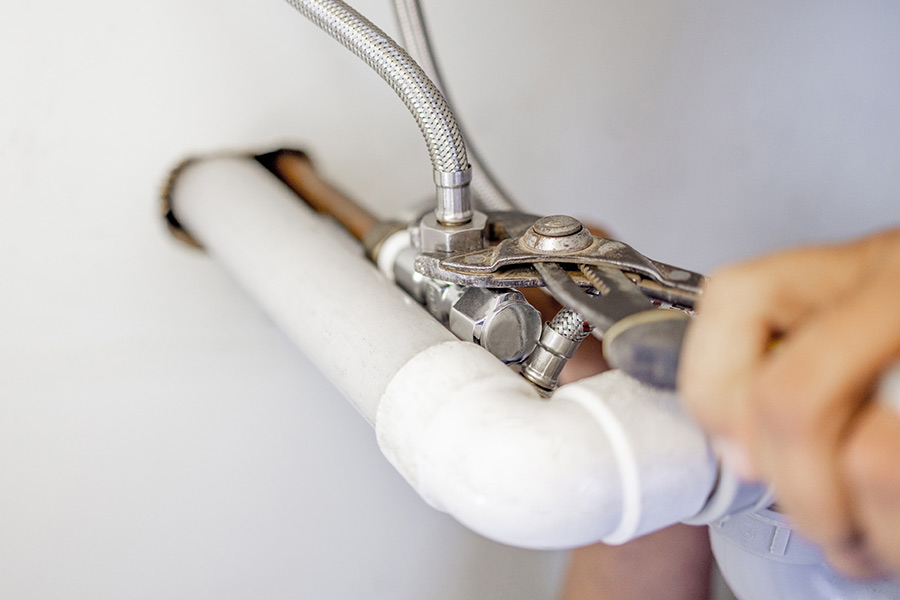
A leaking water heater usually traces back to one of five spots: the drain valve, the pressure relief valve, a heating element gasket, a pipe connection, or the tank itself. Valve, gasket, and fitting leaks can often be repaired. A leak from the tank body usually means it is time to replace the water heater.
A leaking water heater can feel like a disaster, but it is often less serious than it looks. Once you find the source and take a few safety steps, you can tell whether you are facing a simple valve replacement or a tank that has reached the end of its life. This guide walks you through each fix, and when to call a professional instead.
Key Points
- Shut off the power or gas and the cold water supply as soon as you find a leaking water heater.
- Most leaks come from the drain valve, pressure relief valve, element gasket, pipe connections, or the tank.
- Valve, gasket, and fitting leaks are usually repairable; tank leaks usually call for replacement.
- Epoxy can only patch a small tank leak temporarily.
- Most water heaters last 10 to 15 years, so age should factor into any repair decision.
What Should You Do First When Your Water Heater Leaks?
Shut the water heater down and stop the water before you do anything else. These first steps limit damage and keep you safe:
- Turn off the power or gas. For an electric water heater, switch off the circuit breaker. For a gas water heater, turn the gas control to “off.”
- Close the cold water supply valve. The valve on the cold water line at the top of the tank stops new water from entering.
- Contain the water. Move belongings away from the tank and use towels or a bucket to catch dripping water.
- Watch for hot water. Water from the tank or the relief valve can be scalding, so let the tank cool before touching any fittings.
Where Is Your Water Heater Leaking From?
Pinpoint where your leaking water heater is losing water before you start any repair, because water often travels along pipes and the tank surface before it drips. A puddle under the tank does not always mean the tank itself is leaking.
Start by inspecting the tank for moisture or discoloration. Rust or corrosion on the tank is a clear sign of a leak. Next, check the pressure relief valve. This safety device releases water when the pressure or temperature inside the tank gets too high, and a faulty valve drips. Finally, check the inlet and outlet connections, since loose fittings are a common and easy-to-fix cause.
|
Leak Location |
Likely Cause |
Usual Fix |
|
Drain valve |
Worn washers or seals inside the valve |
Replace the drain valve |
|
Pressure relief valve |
Excess pressure or temperature, or a failing valve |
Test the valve; replace it if it keeps leaking |
|
Heating element (electric only) |
Worn or damaged element gasket |
Replace the gasket |
|
Pipe connections |
Loose fitting or corrosion |
Tighten, repair, or replace the pipe |
|
Tank body |
Corrosion, often from sediment buildup |
Temporary epoxy patch; replacement is usually needed |
Is It a Leak or Condensation?
Water under a gas water heater is sometimes condensation, not a leak. When cold water fills the tank, moisture from the burner’s combustion can condense on the cold tank surface and drip. Drips that stop once the water heats up usually point to condensation. Water that keeps pooling after the tank is hot usually means a real leak.
Safety Measures Before You Start the Repair
Take these safety measures before you repair a leaking water heater to protect yourself and avoid further damage to the water heater.
Turn off the water heater. For gas units, turn the gas control to “off.” For electric units, switch off the circuit breaker. Shutting off the energy source prevents electrical shock or a gas leak while you work.
Wear protective gear. Rubber gloves protect your hands from sharp edges and hot surfaces. Safety goggles shield your eyes from debris. If you are working in a tight space, keep it well ventilated.
Prepare a clear workspace. Move anything that blocks your movement or creates a tripping hazard, and set up good lighting so you can see the work area clearly.
How to Drain a Water Heater Before Repairs
Draining a leaking water heater lets you isolate the source of the leak and safely repair most parts. Follow these steps:
- Turn off the water supply and the power or gas.
- Attach a garden hose to the drain valve at the bottom of the tank.
- Run the other end of the hose to a safe discharge point, such as a floor drain or outside away from plants and grass.
- Open the drain valve and let the water flow out.
- Open a hot water tap elsewhere in the house to let air into the system and speed up draining.
Be patient. The tank can take up to 30 minutes to empty completely.
Can You Fix a Leaking Water Heater Tank?
A leaking water heater tank can only be patched temporarily. Corrosion that causes a tank leak usually spreads from the inside, so a patch buys time rather than fixing the problem. After draining, inspect the tank closely, especially the bottom, where sediment buildup often causes corrosion. Use a flashlight so you do not miss any part of the tank.
To patch a small tank leak:
- Find the leak source: Look for rust spots, wet areas, or dripping water. The leak may not sit directly above the water you see.
- Clean the area: Make sure the surface around the leak is clean and dry so the patch adheres.
- Apply epoxy: An epoxy putty or similar sealant can temporarily fix small leaks. Follow the product’s instructions closely.
- Test for leaks: Once the epoxy dries, partially refill the tank and check for leaks. If water still seeps out, call a professional plumber.
- Consider replacement: If the tank is old and the leak is severe, water heater replacement is usually more cost-effective than repeated patching.
How to Replace a Leaking Drain Valve
A faulty drain valve is one of the most common causes of a leaking water heater. The valve leaks even when it is fully closed, usually because its washers or seals have worn out. Look for dripping or moisture around the valve to confirm the problem.
- Turn off the water heater and let it cool down.
- Attach a garden hose to the drain valve and run it to a safe drainage area.
- Open the valve and drain the tank to relieve pressure.
- Remove the faulty drain valve with a pipe wrench. Replace the entire valve rather than just the washer or seal.
- Wrap the new valve’s threads with pipe dope or Teflon tape for a watertight seal, then screw it into the tank.
Why Is the Pressure Relief Valve Leaking?
A leaking pressure relief valve either is doing its job or is failing. The valve releases excess pressure from the tank, so a leak can mean the pressure or temperature inside is too high, or that the valve itself is worn. Repeated discharge often points to high water pressure or a missing or failed expansion tank, which a plumber should check.
To fix a leaking pressure relief valve:
- Shut off the gas or electricity and the cold water supply.
- Slowly lift the valve’s test lever to discharge any water or pressure.
- If the valve keeps leaking, replace it.
- Remove the old valve with pliers or a wrench, and wrap the new valve’s threads with Teflon tape before installing it.
- Tighten the new valve, open the water supply, and check for leaks.
How to Replace a Heating Element Gasket
A worn heating element gasket causes leaks around the element on an electric water heater. The gasket is small, but it seals the element opening in the tank.
- Turn off the power at the breaker and disconnect the water heater from its power source. Do not skip this step.
- Drain the water from the tank.
- Remove the heating element with an element wrench. The gasket sits right behind it.
- Replace the gasket with one that matches the original’s size and shape.
- Reattach the element and tighten it securely, but not so much that you damage the new gasket.
- Refill the tank, restore power, and monitor it closely to confirm the leak has stopped.
How to Fix a Leaky Pipe Connection
A leaky pipe connection on a water heater usually comes from a loose fitting or a corroded section of pipe. Once you find the source, follow these steps:
- Switch off the water heater to prevent injury or further complications.
- Drain the heater with a bucket or hose.
- Detach the faulty pipe with the correct wrench.
- Repair or replace the pipe, applying new pipe joint compound as needed.
- Reattach the pipe and make sure the connection is tight.
If the pipe is badly corroded or the leak returns, our plumbing repair team can replace the damaged section.
Water Heater Maintenance Tips After a Repair
Regular maintenance after a repair extends your water heater’s lifespan and keeps you from facing another leaking water heater.
- Inspect the pressure relief valve: It is a common source of leaks. Make sure nothing blocks it and that it opens freely.
- Drain the tank regularly: Flushing removes the sediment that causes corrosion and reduces efficiency.
- Check for rust and corrosion: Treat surface rust with a water heater rust remover from a home improvement store.
- Test the thermostat: Set it to a moderate temperature, typically around 120 degrees Fahrenheit, to prevent overheating.
When Should You Replace a Leaking Water Heater?
Replace a leaking water heater when its age or ongoing problems make repairs a poor investment. Watch for these five signs:
- Age: Most water heaters last 10 to 15 years. A unit in that range with persistent issues is usually due for replacement.
- Rising energy bills: An inefficient water heater drives up energy use. A steady rise is a sign to consider a more efficient model, and the U.S. Department of Energy’s guide to storage water heaters explains what to compare.
- Frequent repairs: Repeated repair costs can add up to more than the price of a new unit.
- Inconsistent hot water: Hot water that runs out or swings in temperature often signals a failing unit.
- Visible corrosion or leaks: Rust, corrosion, or a leaking tank signals failure. Replace the unit promptly.
If you are replacing anyway, a tankless water heater installation removes the storage tank, and the risk of a tank leak, entirely.
Frequently Asked Questions
Is a leaking water heater dangerous?
A leaking water heater can be dangerous if it is ignored. Water near an electric water heater creates a shock risk, a gas unit with water around the burner may not operate safely, and hot water from the tank can scald. Shut off the power or gas and the cold water supply as soon as you spot a leak.
Can I still use my water heater if it is leaking?
You can sometimes use a water heater with a minor fitting or valve leak for a short time, but it is not a good idea. Small leaks tend to grow and can damage floors and walls. Shut the unit down and repair the leak, or schedule a professional repair, before using it normally again.
Why is my water heater leaking from the bottom?
A water heater leaking from the bottom usually points to a faulty drain valve or a corroded tank. Sediment settles at the bottom of the tank and can cause corrosion over time. Check the drain valve first. If the valve is dry and water is coming from the tank itself, the tank is likely failing.
Should I repair or replace a leaking water heater?
Repair a leaking water heater when the leak comes from a valve, gasket, or fitting on a unit in good condition. Replace it when the tank itself leaks, when the unit is 10 to 15 years old with ongoing problems, or when repair costs keep adding up. A plumber can confirm the source before you decide.
Not comfortable tackling a leaking water heater yourself? The certified technicians at Pro Comfort Control AC & Heating Installation handle water heater repair and replacement with upfront pricing, so you know the cost before any work begins. Contact our team today and we will help you get your hot water back.