
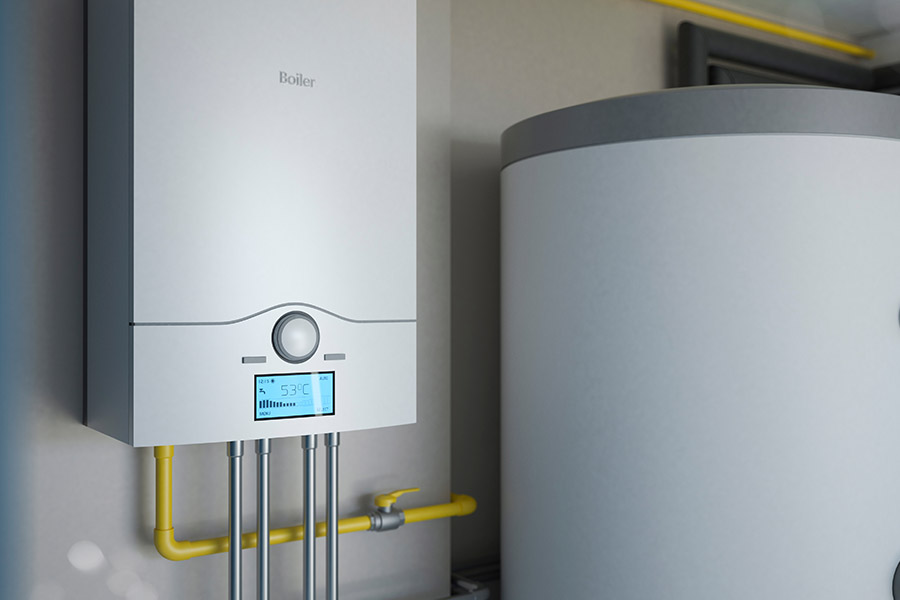
Ever pondered the potential savings you could make just by maximizing your boiler’s efficiency? You can greatly enhance your boiler’s performance by implementing simple yet effective strategies, such as regular maintenance, correct sizing, and proper insulation. Additionally, upgrading to modern technologies and conducting energy audits can optimize fuel consumption. But there’s more to it than meets the eye. Stick around to explore how these techniques, paying attention to water quality and making seasonal adjustments, can boost your boiler’s efficiency and prolong its lifespan.
Understanding Boiler Efficiency
Grasping your boiler’s efficiency is essential in optimizing its performance and reducing energy costs. It’s not merely about how well it heats your water or home; it’s about how much energy it uses. An energy-efficient boiler will save you money and help you serve your community by reducing your carbon footprint.
You need to know some technical terms to understand your boiler’s efficiency. The first is ‘Annual Fuel Utilization Efficiency’ (AFUE), a measure of how efficiently your boiler turns fuel into heat over the course of a year. A higher AFUE percentage means greater efficiency.
The second term you need to understand is ‘Steady State Efficiency’. This measures how efficiently your boiler operates when it’s running continuously. It’s different from AFUE because it doesn’t account for start-up and shut-down cycles.
Also, consider Combustion Efficiency, which determines how well your boiler burns its fuel. A boiler with high combustion efficiency produces less waste and fewer emissions.
Scheduling Regular Maintenance
Scheduling regular maintenance is an essential step you shouldn’t overlook to guarantee your boiler’s peak performance. This not only guarantees ideal operation but also extends the lifespan of your equipment.
Consider creating a maintenance schedule according to the manufacturer’s recommendations. This will likely involve annual or semi-annual check-ups. During these inspections, a professional will assess various boiler components for potential issues. They’ll inspect all the valves, controls, gauges, and safety devices to guarantee they work correctly. They’ll also clean and lubricate parts, maintaining the boiler’s health.
Regular maintenance can prevent minor issues from escalating into major, costly repairs. It’s a proactive measure to prevent unforeseen disruptions and expenses. It also contributes to energy efficiency, helping you save on utility bills and reducing your environmental footprint.
Scheduling regular maintenance isn’t merely a chore—it’s an investment. It invests in reliable performance, energy efficiency, and long-term savings. So, don’t put it off. Start planning your boiler’s maintenance schedule today. It’s a simple step that can significantly affect efficient boiler performance.
Correct Boiler Sizing
Ensuring your boiler is the right size for your property is another essential step toward maximizing its efficiency. Incorrect sizing, whether too large or too small, can lead to unnecessary energy consumption and increased costs. It’s not just about the physical size of the boiler but its heating capacity.
When selecting a boiler, consider your property’s heat load, the type and size of your building, and typical weather patterns in your area. If you have a small, well-insulated property, you won’t require the same boiler size as a large, poorly insulated building.
When a boiler is oversized, it quickly reaches its operating temperature and shuts off, only to restart once the temperature drops. This constant cycling can cause wear and tear on your boiler and lower lifespan. On the other hand, an undersized boiler may struggle to heat your property effectively, leading to higher energy use.
Importance of Insulation
Proper insulation is pivotal in bolstering boiler efficiency, reducing heat loss, and lowering energy costs. When you don’t insulate your boiler, valuable heat escapes, forcing your system to work harder and consume more fuel to maintain your desired temperature. This inefficiency increases your energy costs and places undue stress on the boiler, potentially shortening its lifespan.
Insulation creates a barrier around the boiler, preventing heat from seeping out. The type of insulation material you choose is vital. High-quality, fire-resistant materials like mineral wool or fiberglass are commonly used. These materials provide excellent thermal resistance, guaranteeing that heat remains within the system.
It’s also important to regularly check your insulation for any signs of wear or damage. It’s time to replace or repair the insulation if you notice any deterioration. Similarly, gaps or cracks in the insulation can greatly impact its effectiveness, so you must verify that it’s properly installed and maintained. It’s a small investment that results in considerable energy savings, improved boiler performance, and an overall reduction in your carbon footprint. In serving others, you’re also serving our planet.
Boiler System Upgrades
Upgrading your boiler system can greatly enhance its performance, efficiency, and longevity. It’s a smart investment that pays dividends through reduced energy costs, higher reliability, and less downtime.
As you consider your options, there are several key upgrades you may want to weigh:
- Condensing Boilers: These high-efficiency systems condense the water vapor in the exhaust gases, capturing heat that would otherwise be lost.
- Modulating Burners: These devices optimize fuel consumption by adjusting the burner’s firing rate to match the system’s heat load.
- Heat Recovery Systems: These recycle waste heat back into the system, reducing the amount of fuel needed to reach operating temperatures.
- High-Efficiency Pumps: These are designed to use less energy while maintaining your boiler’s flow rate.
- Advanced Controls: Sophisticated control systems can automate processes and optimize performance, saving energy and reducing wear and tear.
Optimal Thermostat Settings
To enhance your boiler’s efficiency, it’s critical to fine-tune your thermostat settings according to your building’s specific needs and usage patterns. Although it may seem like a minor adjustment, the right thermostat setting can greatly reduce energy consumption and your building’s environmental footprint.
The ideal temperature range for most boilers is between 60 and 75 degrees Fahrenheit. However, this can vary based on several factors, such as the boiler type, the building size, and the outside temperature. You should aim for the lower end of this range during periods of low usage and the higher end during peak usage times.
Smart thermostats can be a great investment in managing this process. They allow you to set different temperatures for different times of the day, adapting to your building’s usage patterns. They can also provide detailed energy usage reports, helping you understand where to improve further.
Advantages of Energy Audits
Ever wondered how much energy your boiler system is wasting and how you could improve its efficiency? Performing an energy audit can be the key to revealing the mystery. It’s a detailed process that brings an array of benefits. Here’s why you should consider it:
- Identify inefficiencies: An energy audit spots where your system falls short, helping you target issues precisely.
- Reduce energy consumption: By identifying and addressing wastage, you’ll reduce energy use, lowering your bills.
- Improve environmental impact: Less energy use translates to fewer emissions, making your operation greener.
- Extend equipment lifespan: Regular audits can help detect issues early, preventing costly repairs and extending the life of your boiler.
- Increase comfort: A more efficient system provides better heating, improving the comfort of those you serve.
Investing in Modern Boilers
Investing in modern boilers can be a game-changer for your energy efficiency. They offer advanced features that reduce wastage and enhance performance. Modern boilers utilize cutting-edge technology to maximize fuel utilization and minimize carbon emissions, greatly contributing to sustainable practices. They’re designed to adapt to fluctuating heat loads, ensuring that you’re not wasting energy when demand is low.
By investing in these advanced systems, you’ll slash your energy bills and contribute to a greener environment by reducing your carbon footprint. These boilers have high-efficiency burners and heat exchangers that can achieve up to 98% efficiency. That’s impressive compared to older models’ 70-80% efficiency.
Moreover, modern boilers incorporate sophisticated controls that give you greater command over your heating system. You can program them to operate at ideal times, saving you more energy. They also have safety mechanisms to prevent potential hazards, offering you peace of mind.
Investing in modern boilers is smart if you’re looking to boost your energy efficiency. You’ll be serving not only yourself but also the environment. It’s a win-win situation that’s worth the investment.
Effect of Water Quality
Shifting the focus to the water quality, it’s crucial to understand that impurities in your boiler’s water supply can greatly impact its efficiency and longevity. Poor water quality can cause many issues, compromising performance and leading to system failure.
Let’s analyze how water quality affects your boiler’s efficiency:
- Scale build-up: Minerals in the water can lead to scale formation on heat exchange surfaces, reducing efficiency.
- Corrosion: Certain impurities can corrode the internal surfaces, leading to leaks and efficiency loss.
- Sludge formation: Impurities can form sludge, obstructing water flow and reducing heat transfer.
- Foaming and priming: Impurities can cause excessive foaming, leading to water carryover and inefficient operation.
- Gas-side fouling: Certain impurities can contribute to the fouling of the gas-side heat transfer surface, reducing efficiency.
Maintain ideal water quality to guarantee your boiler operates at maximum efficiency. Regularly test your water and treat any issues promptly. This isn’t just about saving energy costs; it’s about extending the life of your boiler and serving the people who rely on it. Proper care and maintenance of your boiler’s water supply are practical and a matter of responsibility.
Impact of Seasonal Adjustments
Adjusting your boiler to the changing seasons greatly impacts its efficiency, reducing energy costs and extending its lifespan. As colder seasons approach, you’ll likely ramp up your boiler usage, so it’s critical to guarantee it’s not working harder than it needs to. You can manage this by lowering the thermostat when the building is unoccupied and ensuring your boiler doesn’t overheat spaces.
On the other hand, summer adjustments involve reducing boiler operation as demand decreases. This can be achieved by adjusting the boiler’s operating schedule and lowering the set point. This strategy prevents unnecessary energy consumption and wear on the boiler components.
Moreover, seasonal adjustments should include regular maintenance checks. These include inspecting the boiler’s components for damage, scaling, or corrosion and cleaning the burner and heat exchanger. These checks guarantee that your boiler operates at peak performance regardless of the season.

Conclusion
You might think optimizing your boiler’s efficiency is a challenging task, but it’s simpler than you’d expect. You’ll see significant improvements by implementing regular maintenance, proper insulation, and correct sizing. Add an energy audit, modern boiler upgrades, and water quality checks, and you’re on your way to peak performance. Seasonal adjustments aren’t just for comfort — they’ll extend your boiler’s lifespan. Don’t let energy inefficiency drain your wallet; take control of your boiler’s efficiency today.