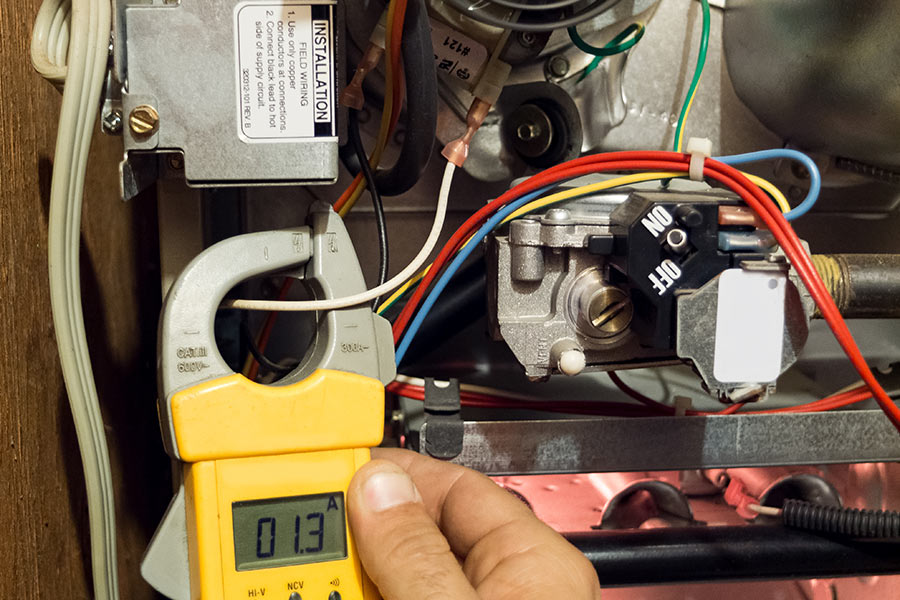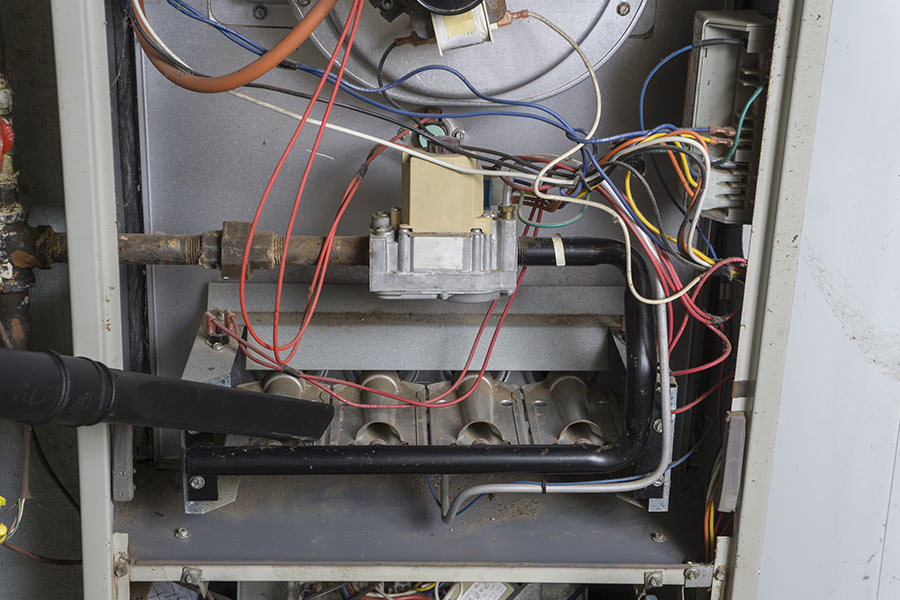
Most furnace problems come down to a short list: frequent cycling, no heat, weak or uneven heat, cold air from the vents, unusual noises, ignition failures, thermostat trouble, or a blower that won’t shut off. Many start with something simple, like a clogged air filter, a thermostat setting, or a tripped breaker, and those are safe to check yourself. Anything involving the burner, ignition, gas valve, electrical components, or heat exchanger belongs with a licensed technician, especially since a cracked heat exchanger can leak carbon monoxide.
Below, we walk through the furnace issues we see most often as Framingham’s heating contractor, what typically causes them, and when it’s time to call in a professional.
Key Points
- Start with three quick checks. Replace a dirty filter, confirm the thermostat is set to “heat” with the fan on “auto,” and check the breaker panel for a trip.
- A clogged filter causes more trouble than most people expect. Restricted airflow can lead to frequent cycling, weak heat, and a system that works harder than it should.
- Furnace sounds are useful clues. Screeching often points to the blower motor, rumbling to a dirty burner, and persistent clicking to the ignition system or flame sensor.
- Cold air or ignition failure usually means a component issue. A faulty flame sensor, dirty igniter, or failing control module needs professional diagnosis, not a home fix.
- Annual maintenance prevents most of these problems. A yearly professional inspection catches burner, heat exchanger, blower, and ignition issues before they leave you without heat.
Understanding Your Furnace’s Components
Understanding the basic parts of your furnace makes it easier to describe a problem accurately when you do need to call for help. A furnace is built around four key components: the burner, the heat exchanger, the blower, and the flue. The burner ignites fuel, whether gas or oil, to heat the heat exchanger. The blower then pushes that warmed air through your home’s ductwork, while the flue safely vents combustion gases outside.
Each part plays a distinct role, and a malfunction in any one of them causes a different kind of problem. A faulty burner can mean insufficient heat, a failing blower can cause uneven heating throughout the house, and a cracked heat exchanger can leak carbon monoxide, which makes it one of the more serious issues a furnace can develop.
Knowing what these components do doesn’t mean you need to service them yourself. It just means you can describe what’s happening more precisely, which helps a technician diagnose the issue faster.
Frequent Cycling: Causes and Solutions
Frequent cycling, where the furnace turns on and off more often than it should, is one of the most common issues homeowners notice. Beyond being annoying, it wastes energy and drives up utility bills.
A dirty or clogged air filter is the most common cause, since it restricts airflow and forces the furnace to work harder than it should. Checking and replacing the filter is a reasonable first step before calling anyone.
If a fresh filter doesn’t solve it, the cause is likely something that isn’t visible from the outside: a faulty thermostat, an improperly sized furnace, or an issue with the thermostat’s heat anticipator. If frequent cycling continues after a filter change, a furnace installation assessment may reveal that the unit was never properly sized for your home in the first place, something a technician can confirm and correct.
No Heat Production: Troubleshooting Steps
A furnace that isn’t producing any heat is alarming, but a few quick checks can narrow down the cause before you call for service.
Start with the thermostat. Confirm it’s set to “heat” rather than “cool,” and that the target temperature is above the current room temperature. Next, check your electrical panel, since a tripped breaker will cut power to the furnace entirely and simply needs to be reset.
Beyond that, the pilot light and ignition system are worth knowing about but not worth handling yourself. A pilot light that’s out or flickering, or an electronic ignition system that won’t fire, both point to a gas or electrical issue that’s best diagnosed and corrected by a licensed technician rather than relit or adjusted at home. The same goes for a dirty air filter contributing to the problem: replacing it is fine, but if that alone doesn’t restore heat, it’s time to call for furnace repair.
Inadequate Heat: Potential Problems
Sometimes a furnace runs but doesn’t produce enough heat, and a few different issues can cause that. A miscalibrated thermostat won’t accurately signal the furnace, so it’s worth checking the setting first. Dirty or blocked air filters are another common and easy-to-check culprit, since restricted airflow reduces how efficiently the system distributes heat.
Uneven heating, where some rooms stay noticeably cooler than others, often points to a ductwork issue, a leak or blockage that a technician can locate and repair. In some cases, the furnace itself may simply be undersized for the home, which calls for a proper system evaluation rather than a quick fix.
A filter check and a look at the thermostat are reasonable first steps. Everything past that is worth having a professional take a look at directly.
Furnace Blowing Cold Air: What to Do
A furnace blowing cold air usually means something specific has gone wrong partway through the heating cycle. Start with the thermostat’s fan setting: it should be on “auto,” not “on,” since the “on” setting runs the blower continuously even when the furnace isn’t actively heating, which can feel like cold air blowing through the vents.
If that’s not the issue, a malfunctioning flame sensor is a common cause. This safety component keeps the burner running once it’s ignited, and when it fails, the furnace can start a heating cycle but fail to sustain it, resulting in cool air instead of warm.
A cracked or damaged heat exchanger can also cause this symptom, and it’s a serious one. A damaged heat exchanger can leak carbon monoxide, so if you suspect this is the cause, it’s worth calling a professional right away rather than investigating further yourself.
Unusual Noises and Their Meanings
Paying attention to unusual furnace sounds can help you describe the problem accurately when you call for service.
A screeching sound often points to the blower motor, potentially a worn belt, a lack of lubrication, or a failing capacitor. Rumbling usually means a dirty burner that isn’t firing evenly, which causes unburned gas to ignite unevenly in the combustion chamber. Clicking sounds are typically tied to the ignition system or gas valve, and persistent clicking after the furnace starts can point to a faulty flame sensor or a control board issue.
None of these are something to open up and inspect yourself. They’re useful clues to share with a technician so they know where to start.
Furnace Ignition Issues
Ignition problems are a common reason a furnace won’t start at all, and they usually trace back to one of a few components.
A dirty igniter can prevent the furnace from lighting reliably. A faulty flame sensor, the same safety component mentioned above, can also block ignition since it’s designed to shut off gas flow if it doesn’t detect a flame. And if the furnace isn’t getting a spark at all, a failing ignition control module is often the cause.
These components are small, sensitive, and located right next to a live gas line, which is exactly why we handle inspection, cleaning, and replacement in-house rather than recommending homeowners test or service them directly. A technician can diagnose which component is at fault and make the repair safely in one visit.
Thermostat Problems: How to Identify
A miscalibrated thermostat can cause a furnace to cycle too often or not enough, and it’s worth ruling out before assuming the problem lies in the furnace itself.
An unresponsive or inaccurate temperature reading is usually the first sign. If your thermostat says 72 degrees but the room clearly isn’t there, it may not be reading or controlling the temperature correctly. A blank or fading display often points to dead batteries, an easy fix, but if fresh batteries don’t help, the issue is likely internal and worth a call to an HVAC professional.
Programming issues are another common complaint. If your furnace isn’t following the schedule you set, the thermostat may need recalibration or replacement, either of which a technician can handle quickly.
Dealing With a Constantly Running Blower
A blower that never shuts off is often a sign of a failing limit switch, the component that controls when the blower turns on and off based on the furnace’s heating cycle. When it fails, the blower can run continuously, adding wear to the system and driving up energy costs.
Diagnosing and replacing a limit switch involves working directly with the furnace’s electrical components, and it’s not something we’d recommend taking on at home. A technician can test the switch, confirm it’s the actual cause, and replace it safely as part of a single service visit.
If your blower won’t stop running, it’s worth calling for furnace repair sooner rather than later, since the added strain can shorten the life of other components.
Preventing Common Furnace Issues: Maintenance Tips
Regular maintenance goes a long way toward avoiding most of the issues above in the first place. A few things worth doing on your own between professional visits:
- Change the air filter every one to three months. A clogged filter restricts airflow and forces the system to work harder than it needs to.
- Keep an eye on your thermostat. If it seems to be cycling the furnace too often or not following its schedule, that’s worth mentioning at your next service visit.
- Check vents and registers for obstructions. Furniture, rugs, or clutter blocking a vent can throw off airflow throughout the house.
Beyond that, scheduling annual furnace maintenance with a professional covers everything else: inspecting the burner, heat exchanger, blower belt, and ignition components, and confirming the venting is clear and safe. That’s where the deeper inspection work belongs, not in a homeowner’s toolkit.
Trusted Furnace Repair in Framingham
Knowing what your furnace’s symptoms mean helps you describe the problem clearly and decide when it’s time to call for help, but the actual diagnosis and repair, especially anything involving gas, electrical components, or the heat exchanger, is best left to a licensed technician. Pro Comfort Control has helped Framingham homeowners work through exactly these issues for years.
If your furnace is acting up, contact our team today and we’ll get a technician out to diagnose and fix it safely.