
Fill out the form below and a member of our team will reach out to you as soon as possible.
Bellingham sits at the southern edge of Norfolk County along the upper Blackstone River watershed, a position that gives it a distinctly different climate feel from the MetroWest towns to the north. The river and its surrounding lowlands push summer humidity higher in the town’s eastern sections, while the more elevated terrain toward the Wrentham and Franklin town lines runs drier. That range means cooling demands across Bellingham vary more than in most nearby communities.
Pro Comfort Control serves Bellingham and the surrounding area with certified HVAC repair from a team that is direct, experienced, and locally focused. We diagnose accurately and fix it right.
We repair central air systems, ductless mini-splits, and heat pumps throughout Bellingham. The town grew substantially in the 1980s and 1990s, and that housing boom left a large inventory of homes with AC systems now approaching or past the 25-year mark. At that age, the gap between a maintained system and a neglected one becomes very apparent in summer performance.
Our technicians evaluate the full system on every visit rather than narrowing focus to the presenting symptom. In older systems, a single failure point often has contributing factors that will cause the next breakdown if they are not addressed at the same time. We explain what we find, tell you what needs immediate attention, and give you a clear picture of what to plan for down the road.
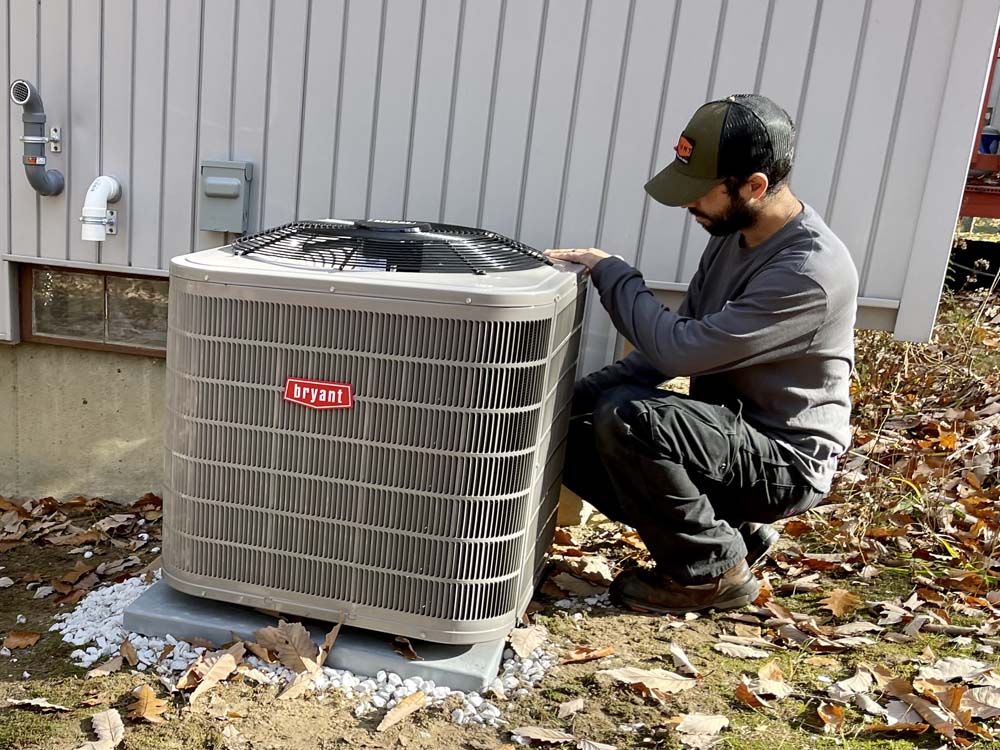
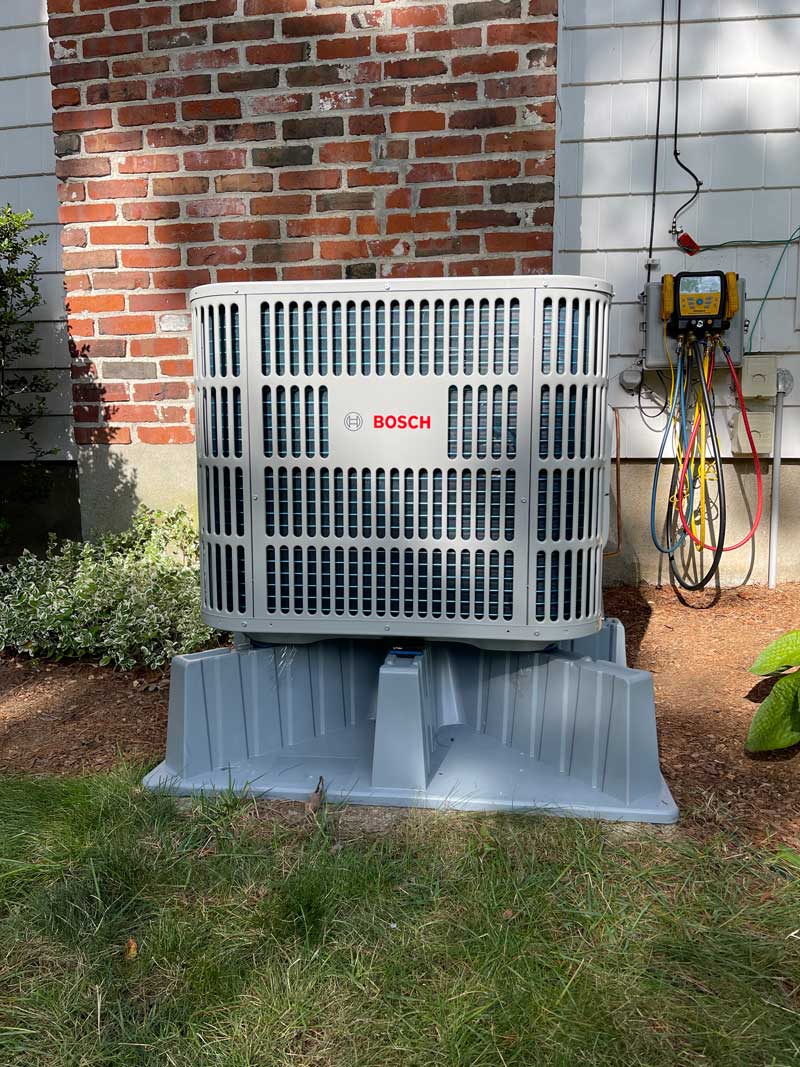
These are the warning signs Bellingham homeowners should watch for as summer heats up.
In the lower-elevation sections of Bellingham near the Blackstone River, these signs are more likely to appear in combination because the added moisture load stresses multiple system components simultaneously.
The Blackstone River and its tributaries that cut through eastern Bellingham create a summer humidity profile that is noticeably heavier than in the town’s upland areas. Homes in these lower sections have evaporator coils and condensate systems that manage above-average moisture output, and deferred maintenance in these conditions leads to faster-developing problems than in drier settings nearby.
Bellingham’s 1980s and 1990s construction wave produced a large number of homes that now have equipment approaching replacement age. Refrigerant leaks from aging copper line sets, capacitor failures, and worn contactors are the most frequent repair findings we encounter on service calls in this age bracket. The town also has a significant number of homes with low-attic construction where ductwork runs in very shallow spaces with minimal insulation, which causes supply air temperature to rise before it reaches the living area and forces the system to run longer to compensate.
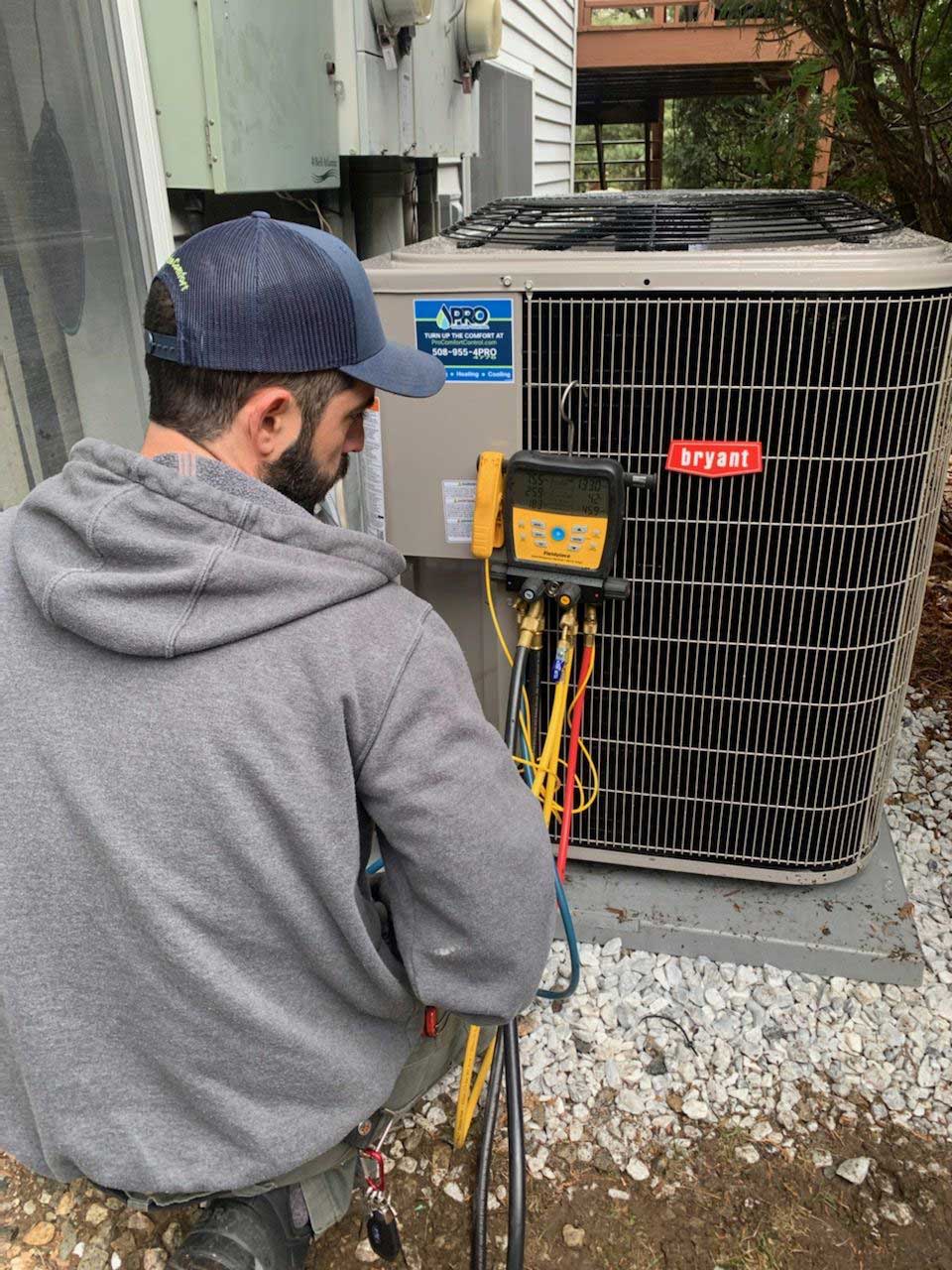
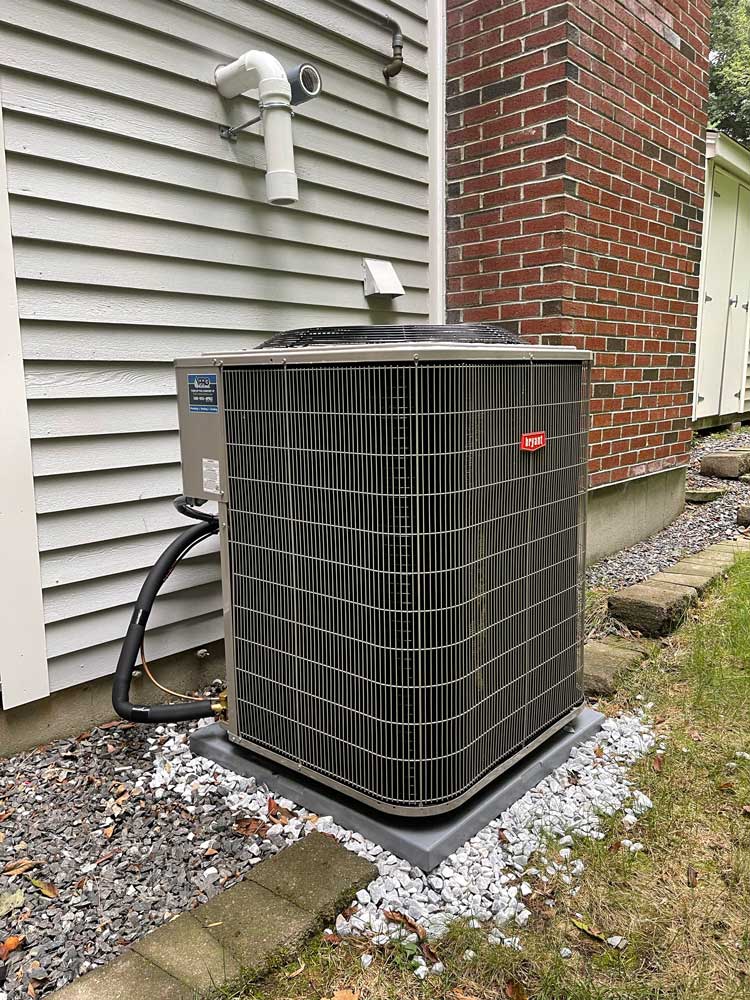
We received a call from James in Bellingham’s South Bellingham area during a hot stretch in late July. His system had been gradually underperforming for most of the summer, and on the hottest day yet it stopped cooling altogether. He had two young kids at home and needed it resolved quickly.
The outdoor unit was locked out on a pressure fault. Our technician found the condenser coil was fouled with debris from a nearby overgrown shrub that had been directing plant material directly onto the unit for at least two seasons. Coil cleaning resolved the pressure issue immediately. While the system ran through its restart cycle, the technician also found the run capacitor was marginal and the refrigerant was slightly low. We replaced the capacitor and topped off the refrigerant after locating a minor leak at the service port. James had a cooling home within a couple of hours. He appreciated that we fixed everything in one visit rather than scheduling follow-up calls.
Bellingham homeowners want dependable service from a company that does the job right and communicates honestly. That is exactly what we bring.
We take pride in leaving every home in better shape than we found it, and that standard applies on every call we take in Bellingham.
A pressure fault lockout occurs when the refrigerant pressure exceeds safe operating limits and a safety switch shuts the compressor down. Common causes include a fouled condenser coil, restricted airflow around the outdoor unit, or overcharged refrigerant.
Properties near the river and its lowland tributaries experience elevated summer humidity that increases dehumidification demand, accelerates drain line issues, and contributes to faster coil fouling. Annual maintenance is more impactful in these conditions than in drier settings.
Yes. Shrubs, vines, or tall grass growing close to the outdoor unit can deposit debris directly on the condenser coil and restrict the airflow the unit needs to reject heat. Keeping the area clear is one of the simplest ways to prevent outdoor unit failures.
When refrigerant charge drops significantly, the system cannot absorb and transfer heat effectively. Eventually pressure drops to the point where a safety switch cuts the compressor off to prevent damage. The system may seem to run normally while producing little or no cooling.
If your system is over 15 years old, we recommend an annual assessment to track its condition. When repair costs in a single season approach or exceed one-third of replacement cost, replacement usually makes better financial sense. We give you that honest breakdown without pressure.
Fill out the form below and a member of our team will reach out to you as soon as possible.